Why 90% of Canada’s AI Data Centers Are Heading to Alberta
Alberta is attracting 90% of Canada’s planned AI data centers. Here’s why the province’s cheap energy, cold climate, and available land are making it the most sought-after address in North America’s AI boom.
Something significant is happening in Alberta, and it isn’t getting nearly the attention it deserves.
While most of the country has been tied up debating clean energy futures and AI policy frameworks, Alberta has been doing something more straightforward — winning.
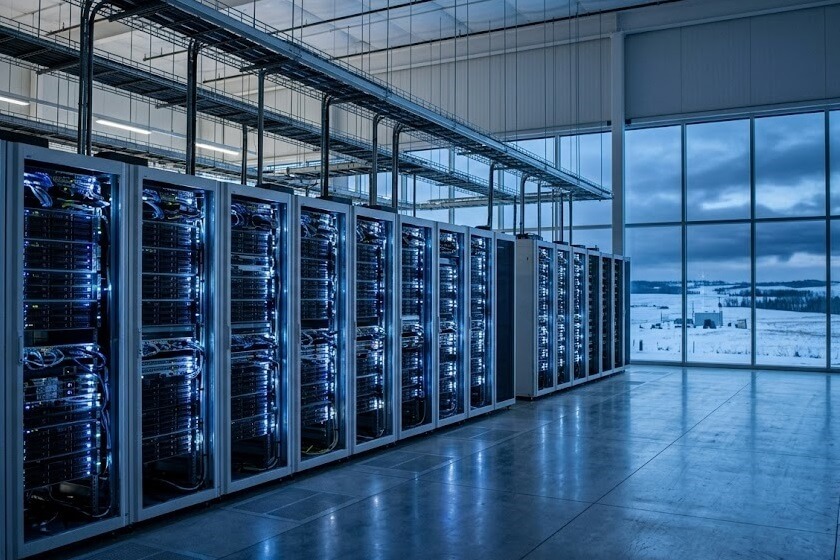
Of the nearly 100 hyperscale data centers currently planned for Canada, roughly 90% are slated for Alberta.
Not Ontario. Not Quebec, Not BC.
Alberta.
An Unexpected Opportunity
Ask anyone who actually builds and operates data centers what they need, and the answer is always the same.
Power — cheap, reliable, and available at a scale that most jurisdictions simply can’t match. A single hyperscale facility can draw as much electricity as a small city. At that consumption level, energy cost isn’t a line item. It’s the whole business case.
Land that’s actually available, without 25-year studies and permitting friction that has slowed or eliminated projects in more densely populated parts of North America.
And It’s Cold. Genuinely cold. Data centers run hot and cooling them is one of the highest ongoing costs a facility carries. An Alberta winter isn’t a liability in this context — it’s money saved every single day the temperature drops.
And the ability to connect to the grid and start operating without waiting years for approvals that may or may not come.
Alberta has all of this. A lot of places don’t have any of it.
The Gas Nobody Wanted
Alberta has been sitting on an abundance of cheap natural gas for years — and is the fifth-largest natural gas producer in the world
For much of the past several years, that supply has outpaced demand badly enough that prices occasionally went negative. Producers were effectively paying people to take their gas. That’s an uncomfortable position for an energy province to be in.
Data centers change the math in a hurry. A single large facility continuously creates the kind of sustained, predictable energy demand that natural gas producers have been short of.
Mike Belenkie, CEO of Advantage Energy, said it directly — the industry is looking for every possible way to draw investment to Alberta and put its energy to work. Data centers are that opportunity, and they’re arriving at a moment when the province genuinely needs them.
Alberta’s Technology Minister Nate Glubish has made multiple trips to Silicon Valley since 2024, making the same pitch. The province is targeting $100 billion in data center investment. A year ago that number might have sounded like wishful thinking. It doesn’t anymore.
Pending Announcement
Pembina Pipeline and partner Kineticor are expected to make a final investment decision by the end of June on their 900-megawatt natural gas-fired generating facility tied to a large-scale data center project. That’s a real decision with a real date — not a feasibility study or a letter of intent.
Twenty data centers are running in Alberta today. This isn’t a province trying to attract an industry it hasn’t worked with. It’s a province scaling up something that already works.
Glubish called data centers digital pipelines and digital refineries. It’s a useful frame for anyone who grew up watching what pipelines and refineries actually did for Alberta’s economy — how they took something raw and turned it into something the world would pay for, reliably, over decades.
The pitch to Silicon Valley remains the same – Alberta has always made energy, and this project is a new audience.
Why Alberta Moves Faster
There’s something else going on beneath the investment numbers that’s harder to quantify but worth saying.
Tech companies building at hyperscale are not patient organizations. They’re trying to deploy enormous amounts of capital quickly, in locations that can actually absorb it without grinding through years of bureaucratic process. Alberta’s instinct — shaped by decades of operating in industries that reward speed — is to figure out how to get things built.
That reputation travels. And right now it’s traveling to the right rooms.
Ninety percent of Canada’s planned hyperscale data centers are coming to Alberta. The province has the energy, land, climate, and workforce to make it possible.
It also has an optimistic vision to say yes.
Sources
- Alberta pitches cheap natural gas for data center boom — BOE Report / Reuters https://boereport.com/2026/06/09/alberta-pitches-cheap-natural-gas-for-data-center-boom/
- New era of opportunity for oil and gas in Canada — CTV News Edmonton https://www.ctvnews.ca/edmonton/video/2026/06/09/new-era-of-opportunity-for-oil-and-gas-in-canada-analyst-alberta-primetime/
