Why Alberta Businesses Are Learning to Adapt — Not Wait
Most businesses don’t have the luxury of waiting for conditions to improve.
When costs rise, when supply chains shift, when trade rules change — the response isn’t theoretical. It’s immediate. Orders still need to be filled. Employees still need to be paid. Customers still expect consistency.
Across Alberta, that reality is playing out again as global tariffs and trade disruptions continue to reshape how companies operate.
But what’s becoming clear isn’t just the challenge — it’s how businesses are responding to it.
Pressure Doesn’t Pause Business — It Refocuses It
Tariffs don’t always show up in obvious ways. They move through supply chains quietly — increasing input costs, delaying materials, or making certain markets less accessible.
For many Alberta businesses, especially in manufacturing, agriculture, and metal processing, those pressures are real and ongoing. Government data notes that tariffs and shifting trade conditions are increasing costs and disrupting supply chains across multiple sectors.
But businesses don’t respond by standing still.
They adjust.
Sometimes that means sourcing materials differently. Sometimes it means rethinking production. Often, it means finding ways to become more efficient — not as a strategy, but as a necessity.
Adaptation Is Happening on the Ground
Recent federal investments into Alberta businesses offer a window into how that adaptation is actually taking shape.
Through the Regional Tariff Response Initiative, about $4 million was distributed to four Alberta companies to help them upgrade equipment, expand production, and reduce reliance on tariff-sensitive inputs.
What’s notable isn’t just the funding — it’s how it’s being used.
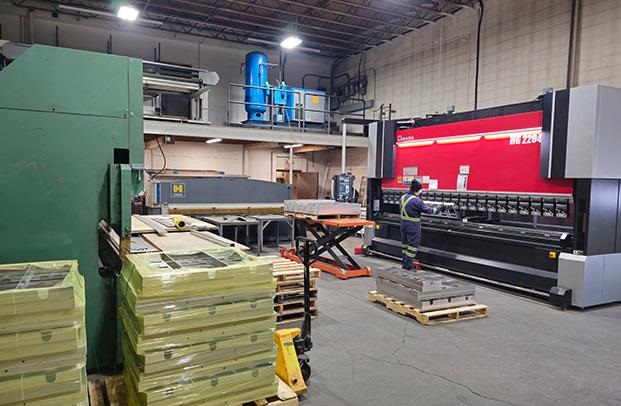
One company is automating production to reduce costs and expand product lines. Another is increasing its ability to process domestic materials instead of relying on imports. Others are investing in precision manufacturing tools to compete in specialized industries.
In each case, the response isn’t defensive. It’s constructive.
These businesses aren’t waiting for conditions to return to normal — they’re building systems that work under new conditions.
A Shift Toward Control
One of the consistent patterns emerging from these changes is a move toward greater control.
When external factors become less predictable, businesses look inward:
- bringing production in-house
- shortening supply chains
- investing in technology that reduces dependency
This isn’t unique to Alberta, but it’s particularly visible here because of how export-oriented the province’s economy is.
Programs like the Regional Tariff Response Initiative are designed specifically to support that shift — helping businesses diversify markets, strengthen domestic supply chains, and improve productivity.
But the underlying behaviour exists regardless of funding.
Businesses adapt because they have to.
Growth Doesn’t Stop — It Changes Shape
There’s a common assumption that when external pressures increase, growth slows or stops.
In reality, it often just changes form.
Instead of rapid expansion, businesses focus on:
- efficiency
- reliability
- maintaining customer relationships
- staying competitive in smaller, more controlled ways
This kind of growth is less visible, but more durable.
In Alberta, where many industries are tied to global markets, that shift is especially important. Businesses that can adjust quickly — and continue delivering — tend to outlast those waiting for stability to return.
What This Means for Local Economies
While tariffs are a global issue, their effects are local.
When a manufacturer improves efficiency, it stabilizes jobs. When a processor reduces reliance on imports, it strengthens domestic supply chains. When a company expands capacity, it creates opportunities that ripple outward into the community.
The recent federal investment is expected to support more than 185 jobs across Alberta, reinforcing how closely business resilience is tied to local economic health.
These aren’t abstract outcomes. They show up in everyday ways — steady employment, consistent service, and businesses that remain present in their communities.
The Pattern Behind It All
Across industries, the pattern is consistent:
When conditions become uncertain, Alberta businesses don’t wait for clarity — they build around it.
They invest in what they can control.
They improve what they can measure.
They continue serving the customers who depend on them.
And over time, that approach compounds.
A Closing Observation
Economic conditions will always shift — tariffs, markets, supply chains. Those variables are rarely within a business owner’s control.
What remains consistent is how businesses respond.
Across Alberta, that response tends to follow a familiar path: adapt early, stay reliable, and keep moving forward.
Alberta’s Best Business Directory exists to reflect that same reality at the local level — helping Albertans connect with businesses that continue to show up, adjust, and deliver, even when conditions aren’t perfect.
Sources
- Prairies Economic Development Canada. Government of Canada announces investments to help tariff-impacted businesses in Alberta adapt and grow. March 17, 2026.
- Prairies Economic Development Canada. Backgrounder: Strengthening industries and businesses in southern Alberta. February 2026.
- rdnewsNOW. Federal government announces investments to help central Alberta businesses. March 17, 2026.
