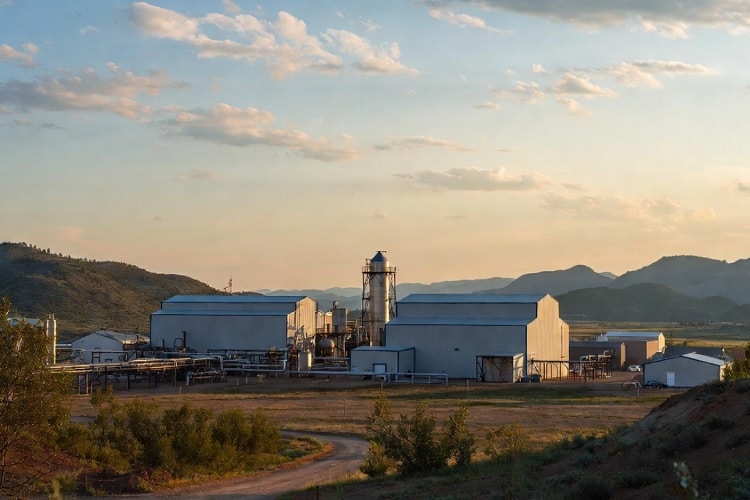
What Alberta’s Lithium Potential Really Means
It starts the way many Alberta stories do — with something beneath the surface.
For decades, that meant oil and gas. Resources that shaped communities, industries, and livelihoods across the province. But every so often, a new possibility emerges. Not as a replacement, but as an addition. A signal that the economy may be expanding in ways that aren’t immediately visible yet.
Recently, that signal has come in the form of lithium.
A new report suggests Alberta could be sitting on lithium resources with a potential value approaching $1 trillion, largely concentrated in brine formations that have long been associated with existing oil and gas operations. Unlike traditional hard-rock mining, much of Alberta’s lithium would be extracted from underground fluids — the same systems the province already understands well.
At first glance, it sounds like the beginning of another resource boom.
But in practice, what happens next is more measured — and more interesting.
From Possibility to Process
Resource estimates can be powerful, but they’re only the starting point.
Lithium in Alberta isn’t sitting in easily accessible deposits waiting to be collected. It exists in dissolved form within subsurface brines, which means extraction depends on new technologies, infrastructure, and careful economic planning.
That process is already underway.
Pilot projects across the province are testing direct lithium extraction (DLE) methods — technologies designed to pull lithium from brine more efficiently and with less environmental impact than traditional mining. These methods are still being refined, but early results have been promising enough to attract attention from both industry and government.
What makes this different from past resource development is the timeline.
This isn’t an industry that appears overnight. It builds gradually — through testing, scaling, and investment decisions made over years, not months.
Why Alberta Is Uniquely Positioned
Not every region with lithium resources is positioned to develop them effectively. Alberta’s advantage isn’t just what it has underground — it’s what already exists above it.
Decades of oil and gas development have created:
- extensive subsurface expertise
- established infrastructure networks
- a skilled workforce familiar with fluid extraction and processing
- regulatory frameworks for resource development
In many ways, lithium development in Alberta is less about starting from scratch and more about adapting what’s already there.
That’s part of why industry observers see potential. The same knowledge used to manage energy resources could be applied to a different type of extraction — one tied to global demand for batteries, electrification, and energy storage.
Global Demand Is Real — But So Is Competition
Lithium demand is growing, driven largely by electric vehicles and battery storage systems. Countries around the world are investing heavily in securing stable supply chains for critical minerals.
But demand alone doesn’t guarantee success.
Alberta isn’t the only region developing lithium resources. Established producers in South America and Australia already supply much of the global market, and new projects are emerging in the United States and elsewhere in Canada.
That means Alberta’s opportunity depends on more than resource size. It depends on:
- cost competitiveness
- extraction efficiency
- environmental performance
- the ability to move from pilot to production
In other words, potential has to translate into execution.
How Industries Actually Take Root
If lithium development moves forward, it won’t just be a story about extraction.
Like every resource industry in Alberta, it will create layers of economic activity around it:
- engineering and environmental services
- equipment manufacturing and maintenance
- transportation and logistics
- local service businesses supporting workers and operations
This is how industries take root — not all at once, but through networks of businesses that grow alongside the core activity.
In the early stages, much of that growth happens quietly. Small contracts. Pilot facilities. Incremental hiring. Over time, if the conditions are right, those pieces begin to connect.
A Different Kind of Resource Story
There’s also a broader shift happening in how resource development is viewed.
Traditional resource booms were often defined by rapid expansion and visible change. Newer industries, particularly those tied to energy transition and advanced materials, tend to develop more gradually and with greater scrutiny.
Environmental considerations, water use, and land impact all play a role in how projects move forward. Technologies like direct lithium extraction are being closely watched because they offer the possibility of lower-impact production — but they still need to prove themselves at scale.
This makes the path forward more deliberate.
Slower, perhaps — but potentially more sustainable.
What This Means for Alberta’s Economy
If lithium development succeeds, it won’t replace existing industries. It will add to them.
That distinction matters.
Alberta’s economy has always evolved by layering new opportunities onto existing strengths. Agriculture, energy, manufacturing, and services all coexist — each contributing in different ways.
Lithium has the potential to become another layer.
It could:
- diversify revenue streams
- create new types of jobs
- position Alberta within emerging global supply chains
But those outcomes depend on consistent progress — not just initial excitement.
The Pattern Behind the Opportunity
There’s a familiar pattern in how Alberta grows.
Opportunities appear first as possibilities — numbers, projections, early reports. Then come the businesses willing to test those possibilities. Over time, if the fundamentals hold, those efforts turn into something more tangible.
What determines the outcome isn’t the size of the resource alone.
It’s whether businesses can:
- build viable operations
- adapt existing expertise
- remain competitive in changing markets
That’s where the real story unfolds.
A Closing Observation
Alberta’s lithium potential is significant. The numbers alone are enough to capture attention.
But what matters more is what happens next.
Whether this becomes a defining industry or a limited opportunity will depend on the same factors that shape every part of Alberta’s economy: practical innovation, steady investment, and businesses willing to build something real from what’s possible.
Sources
- Canadian Mining Journal. Report suggests Alberta could sit on $1-trillion lithium ‘goldmine’.
- The Albertan. Lithium potential economic driver according to MLA Brian Jean.
- Government of Alberta & industry reports on lithium brine resources and direct lithium extraction (DLE) development
- Natural Resources Canada. Critical minerals and lithium demand outlook
