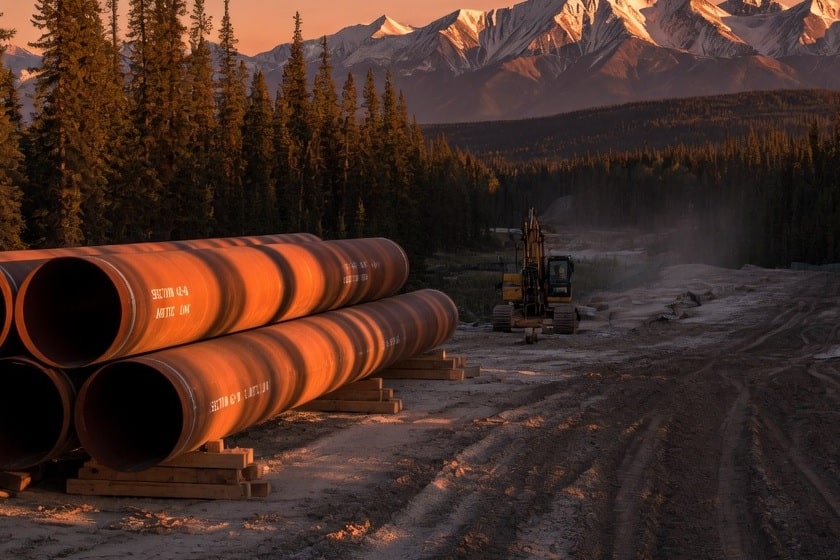
Alberta Eyes New West Coast Pipeline — A Decision That Could Reshape Trade and Local Opportunity
Canada is exploring a new oil pipeline route from Alberta to the West Coast, a move that could expand export access while shaping economic opportunities for businesses across the province.
Across Alberta, energy development has always been tied to timing, access, and direction. Whether it’s production near Fort McMurray or logistics and support services operating out of Calgary, the ability to move resources efficiently has long shaped how businesses grow and plan for the future. For many companies, it’s not just about how much can be produced—it’s about where it can go.
That question is back in focus.
The federal government is considering options for a new oil pipeline that would connect Alberta to the Pacific coast, with the goal of expanding access to international markets. While Alberta has promoted a northern route դեպի the Port of Prince Rupert, discussions in Ottawa suggest a southern path toward Vancouver may be under closer consideration.
At a glance, the decision is about geography. In practice, it reflects a broader effort to diversify Canada’s energy exports at a time when global demand and trade dynamics are shifting. With ongoing pressure tied to international trade tensions, expanding access beyond traditional U.S. markets has become a more immediate priority.
On paper, both routes offer distinct advantages. A northern path could provide faster access to Asian markets and accommodate larger tankers, potentially improving efficiency and pricing for exported oil. A southern route, meanwhile, may present fewer regulatory and environmental hurdles by building closer to existing infrastructure.
At a high level, the difference between the two paths comes down to a few key considerations:
- Northern route (Prince Rupert): Shorter shipping time to Asia and access to larger crude carriers
- Southern route (Vancouver area): Potentially fewer regulatory hurdles and closer alignment with existing infrastructure
For businesses across Alberta, the difference between those options is more than technical.
In communities like Red Deer, where many companies operate in support roles tied to the energy sector, long-term infrastructure decisions often influence when and how work begins. A project of this scale can shape demand for everything from construction and engineering to transportation and local services. Even businesses not directly involved in energy production can feel the effects through increased activity and investment.
That impact tends to unfold gradually, but it begins with certainty. When a clear direction is set—whether northern or southern—it allows companies to plan, hire, and position themselves for upcoming work. Without that clarity, many remain in a holding pattern, watching closely but waiting to commit.
The broader ripple effects can extend well beyond the immediate project footprint. As new infrastructure takes shape, it often creates a chain of economic activity that moves through multiple layers of the local economy. Suppliers scale up, service providers adjust to new demand, and communities begin to see increased movement tied to construction and long-term operations.
At the same time, the decision is not without complexity.
Each potential route carries its own set of challenges, from environmental considerations to the need for meaningful engagement with Indigenous communities. Northern proposals face additional hurdles tied to terrain, ecological sensitivity, and existing restrictions on tanker traffic along British Columbia’s north coast. Southern routes, while potentially more aligned with existing infrastructure, present their own engineering and capacity considerations.
For many observers, the outcome will depend on how those factors are balanced against economic priorities. The federal government has indicated that any proposal will be evaluated based on criteria that include economic benefit, environmental responsibility, and the likelihood of successful execution.
Beyond the route itself, the conversation also reflects a broader shift in how Canada is positioning its energy sector. With production levels rising and global demand evolving, there is growing pressure to ensure that infrastructure keeps pace. Industry leaders have signalled increasing confidence in expanding output, but that growth depends on having reliable pathways to market.
For local businesses, the takeaway is less about the final route and more about what it represents. Large-scale infrastructure projects tend to move in phases, and the early stages—planning, approvals, and initial development—often set the tone for years of economic activity that follow.
Being prepared for that shift, even before final decisions are made, can make a meaningful difference. Businesses that stay visible, connected, and ready to respond are often the first to benefit as projects move from concept to reality.
For now, the direction of a new pipeline remains under discussion, with key decisions still ahead. But even at this stage, the conversation points to a broader effort to expand opportunity, strengthen trade access, and position Alberta’s economy for the years ahead.
And in communities across the province, where local businesses help translate large-scale projects into everyday economic activity, staying connected to those shifts remains part of how Alberta continues to move forward—something Alberta’s Best reflects in the way it brings those connections into focus.
Sources
- Ottawa leans toward new oil pipeline route from Alberta to southern B.C., sources say — The Globe and Mail
