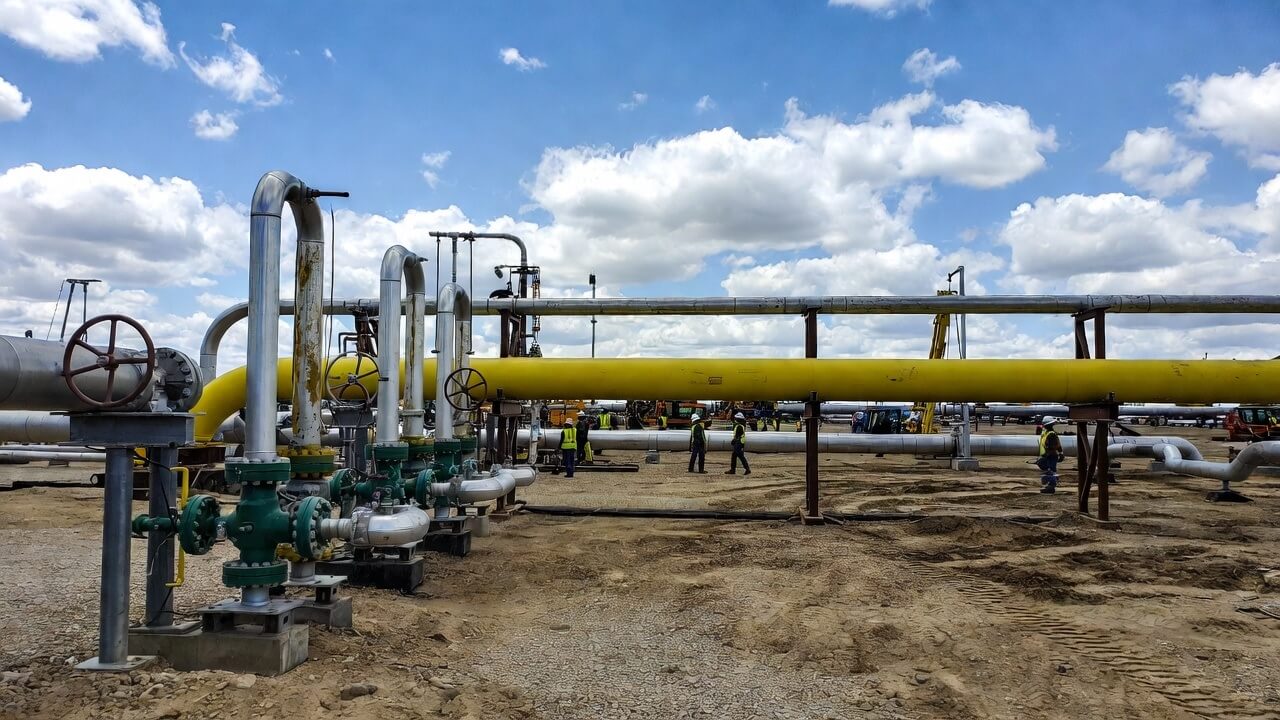
Enbridge CEO Greg Ebel says the company won’t lead or fund a new West Coast pipeline. Here’s what that decision means for Alberta producers, investors, and local businesses.
Enbridge Steps Back From West Coast Pipeline Leadership — A Strategic Shift for Alberta Energy
One of Canada’s largest energy infrastructure companies has made its position clear.
Enbridge will not lead or finance a new West Coast pipeline project, according to CEO Greg Ebel, who said the company has no interest in taking on the financial and regulatory risks associated with building a new major export line at this time (1).
For Alberta’s energy sector — and for businesses connected to it — the statement is significant.
Pipeline capacity has long been central to the province’s economic debate. Access to tidewater means access to global pricing. Without it, producers remain heavily dependent on U.S. markets.
But Enbridge’s position signals something important: major private-sector players are prioritizing stability and disciplined capital allocation over politically charged megaprojects.
A Calculated Decision, Not a Political One
According to reporting by EnergyNow, Ebel emphasized that Enbridge is not willing to assume the kind of risk that derailed previous pipeline proposals (1).
Canada has seen several high-profile pipeline projects face cancellation, legal challenges, and escalating costs over the past decade. Those experiences reshaped how investors evaluate large-scale infrastructure ventures.
Rather than initiating a new West Coast proposal, Enbridge appears focused on optimizing and expanding existing systems where risk is more manageable and regulatory pathways clearer.
This reflects a broader trend across capital-intensive industries: growth is increasingly measured and risk-adjusted.
What This Means for Alberta Producers
For producers in Alberta, the absence of a new privately backed West Coast pipeline proposal reinforces an ongoing reality — large-scale export expansion will likely depend on government-backed initiatives or partnerships rather than purely private capital.
Existing infrastructure, including the federally owned Trans Mountain Corporation expansion, already provides increased access to Pacific markets (2). However, long-term production growth projections often assume additional capacity over time.
If major firms like Enbridge are unwilling to lead new coastal ventures, future export infrastructure discussions may shift toward incremental expansions instead of entirely new corridors.
For producers, that means continued emphasis on operational efficiency, cost control, and market diversification rather than relying on large new pipeline builds to unlock value.
Investor Signals: Capital Discipline Comes First
Energy investors have become increasingly focused on capital discipline.
After years of boom-and-bust cycles, shareholders are demanding stable returns, dividends, and debt reduction instead of aggressive expansion at any cost.
Ebel’s comments align with that investor mindset. Rather than pursuing high-risk megaprojects, companies are channeling capital toward:
- Modernizing existing infrastructure
- Expanding lower-risk segments such as natural gas and utilities
- Investing in energy transition initiatives
This approach may produce steadier returns — but it also suggests that Alberta’s next wave of export infrastructure will not mirror the ambitious pipeline proposals of the early 2010s.
The Broader Economic Impact
Energy infrastructure decisions ripple well beyond the oilpatch.
Construction firms, engineering companies, equipment suppliers, transportation providers, and professional services firms all feel the effects of large capital projects.
When a company the size of Enbridge publicly declines to lead a new venture, it tempers expectations across those sectors.
At the same time, capital not deployed into high-risk megaprojects may instead flow into maintenance, modernization, renewable energy initiatives, or natural gas infrastructure — areas that still generate significant economic activity.
For Alberta’s broader business community, the takeaway is balance. Growth may continue, but it may look different: less headline-grabbing, more incremental.
A Different Energy Era
Over the past decade, the Canadian energy landscape has changed dramatically.
Regulatory timelines have lengthened. Environmental scrutiny has intensified. Global capital markets are more selective. And political dynamics — both domestically and internationally — add layers of unpredictability.
Against that backdrop, Enbridge’s position reflects pragmatism.
Rather than championing a new West Coast corridor, the company appears focused on extracting value from assets already in place.
For policymakers and industry advocates, this may shift conversations toward how governments can create investment conditions that reduce uncertainty and improve project viability.
What Happens Next?
The absence of private-sector leadership doesn’t necessarily mean a new West Coast pipeline will never happen.
But it does mean any future proposal would likely require:
- Strong regulatory clarity
- Political stability
- Shared financial risk structures
- Demonstrated long-term market demand
Until those conditions align, Alberta’s export strategy will likely center on optimizing current systems and leveraging existing market access.
For local business owners — whether directly tied to energy or indirectly connected — this reinforces an important theme emerging across multiple sectors: resilience and efficiency matter more than expansion headlines.
A Measured Path Forward
Enbridge’s message isn’t anti-growth. It’s risk-aware.
By declining to lead or fund a new coastal megaproject, the company is signaling that in today’s environment, disciplined investment outweighs ambitious expansion.
For Alberta’s energy economy, that may mark a transition from a pipeline-building era to a performance-optimization era.
And for businesses across the province, understanding that shift is essential.
Sources
- EnergyNow. “Enbridge won’t lead or fund a West Coast pipeline venture, CEO says.” February 2026.
https://energynow.ca/2026/02/enbridge-wont-lead-or-fund-a-west-coast-pipeline-venture-ceo-says/ - Trans Mountain Corporation. “Trans Mountain Expansion Project Overview.”
https://www.transmountain.com/project-overview
