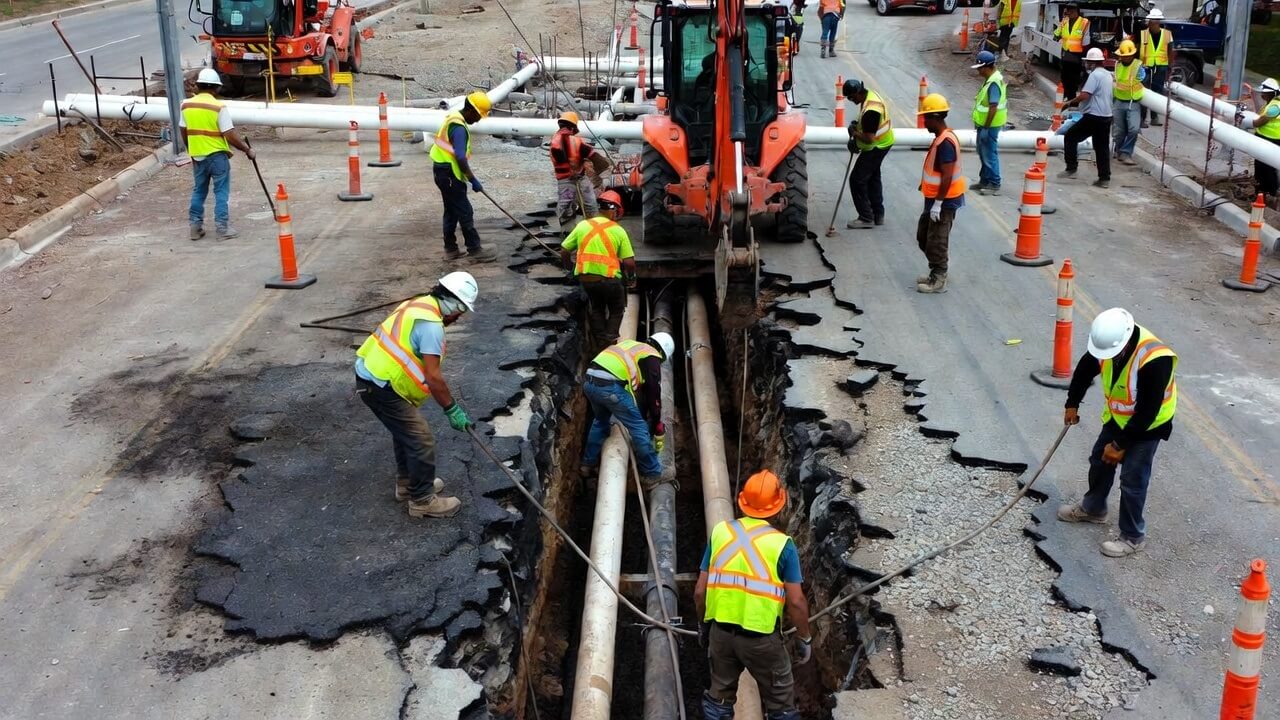
Calgary needs nearly $6 billion over the next decade to fix aging infrastructure. Learn what this means for business operations, community planning, and long-term economic growth.
Calgary’s Infrastructure Challenge: $5.7 B Needed to Keep the City Moving — Here’s What Local Businesses and Residents Should Know
Calgary is gearing up for one of the most significant infrastructure spending debates in years. According to a recent city report, the municipality will require at least $5.7 billion over the next decade to repair, replace and support its most critical infrastructure — from water systems and roads to bridges and transit assets — just to prevent service disruptions and serious safety risks. (Global News)
That striking figure comes from an update to the City’s Corporate Asset Management Plan, presented to Calgary’s Infrastructure and Planning Committee in February 2026. It underscores growing concerns that Calgary’s infrastructure — much of it built in the 1970s and 1980s — is approaching a tipping point. (Global News)
For local businesses, residents, and entrepreneurs, these numbers aren’t abstract. They’re an early signal of how municipal priorities, costs, and investment decisions could shape everyday life and economic growth in Canada’s fourth-largest city.
Aging Assets and Rising Costs
The city’s current asset inventory is vast — roughly $18 billion worth of city-owned infrastructure — and about 11 per cent of those assets are rated in poor or very poor condition, according to condition assessments cited in the report. (Global News)
Of that total, approximately $1.7 billion is tied to “critical” assets — pieces of infrastructure whose failure would result in significant service disruptions and potential risks to public safety. (Yahoo News)
These include water transmission mains, wastewater systems, roads, bridges and key transit corridors — all facilities that both businesses and residents rely on every day.
According to city officials, upgrades and redundancy improvements are urgently needed. For instance, roughly 120 km of Calgary’s water transmission mains currently lack redundancy, meaning there’s no backup system if a major line fails — a vulnerability the city is looking to address by 2029. (Global News)
Why Now? The Risk of Delay
Calgary’s mayor, Jeromy Farkas, has stressed the urgency of acting now rather than later. “Our infrastructure is very close to crisis mode,” he said at a recent briefing, noting that proactive investment now could save taxpayers from much higher costs down the road. (Global News)
That warning isn’t coming out of nowhere. Recent infrastructure failures — such as water main ruptures that led to boil water advisories and severe service impacts — have highlighted the real human and economic cost of aging systems. Independent reports have shown the city’s water utility has under-invested in capital maintenance for decades, only spending its full capital budget twice in the last 20 years. (Global News)
City councillors are now weighing how to fund these needs, with discussions around potential property tax increases, utility rate hikes, or reallocation of reserves all part of the conversation. (Global News)
What This Means for Local Businesses
For business owners, the implications of Calgary’s infrastructure funding challenges are multifaceted.
1. Operating Costs and Taxes
Infrastructure spending must come from somewhere — and that often means either higher taxes or increased utility rates over time. For small businesses already facing pressures from rising costs, labour shortages, and supply chain volatility, any increase in operating expenses can directly affect margins, hiring decisions, and pricing strategies. (Global News)
2. Reliability of Services
Unreliable infrastructure — whether it’s water services, road conditions, or transit connectivity — can disrupt business operations. Restaurants, manufacturers, retailers, and service providers all depend on consistent utility service, transport networks, and customer access. Any prolonged outage or deterioration can lead to lost revenue, scheduling headaches, and increased maintenance costs.
3. Growth and Investment Planning
When a city signals major capital needs, it can also affect decisions by investors and developers. Infrastructure readiness — or lack thereof — is a key factor in site selection, expansion plans, and long-term forecasting. Businesses looking to open new locations or invest in facilities often consider the quality and future reliability of city services as part of their risk assessment.
Opportunities in the Challenge
It’s not all downside. Large-scale infrastructure planning also brings economic opportunity, especially for local companies in construction, engineering, supply, and professional services.
Contractors and tradespeople stand to benefit from sustained work on water lines, bridges, roads, and transit networks. Engineering and project management firms can offer expertise in planning upgrades, redundancy enhancements, and resilience strategies. And technology firms working on smart systems, sensors, and asset management platforms may find new demand for innovation that helps reduce long-term costs and risks.
For entrepreneurial and small tech firms, there’s also a rising need for digital monitoring, predictive maintenance tools, and efficiency solutions that help municipalities manage assets more intelligently.
Broader Context: Calgary’s Budget Comes into Play
This infrastructure spending requirement comes amid broader budget discussions in Calgary.
In late 2025, Calgary city council approved the 2026 budget, which included a 1.64 per cent property tax increase — a reduced figure from earlier proposals — and allocated funds for public safety, transit, and recreation, much of it drawn from reserves. (Global News)
At the same time, a preview of the 2026 budget highlighted planned investments of more than $260 million above expectations, including $1.1 billion in water infrastructure work and other priority areas such as transit and public safety. (newsroom.calgary.ca)
These moves reflect Calgary’s attempt to balance immediate community needs with longer-term capital challenges, all while trying to remain affordable and competitive for residents and businesses alike.
Looking Ahead: A Strategic Investment Moment
Cities across Canada are facing similar challenges as infrastructure built in the post-war boom years reaches the end of its useful life. Calgary’s situation — with billions in critical infrastructure upgrades needed — may seem daunting, but it also represents a strategic investment moment.
For local business owners and residents, engaging with these conversations — through public hearings, civic engagement, and feedback channels — matters. How infrastructure is funded, planned, and rolled out will influence Calgary’s liveability, business climate, and competitiveness well into the 2030s and beyond.
The city is expected to present more detailed plans in the spring, including a 10-year Capital Infrastructure Plan that could outline specific funding mechanisms and project timelines. (Global News)
Whether you’re a café owner in Inglewood, a tech founder in the Beltline, or a manufacturer in the north end, Calgary’s infrastructure future will shape the economic and community landscape for many years — and understanding that future now will help you be part of it.
Sources
- Calgary requires at least $5.7B over next 10 years for critical infrastructure, Global News (Feb 11, 2026) (Global News)
- $1.7 B worth of Calgary’s most critical assets in ‘poor’ condition: report, Yahoo News Canada (Feb 11, 2026) (Yahoo News)
- Calgary city council 2026 budget passes, Global News (Dec 2025) (Global News)
- City of Calgary releases preview of 2026 Budget, City of Calgary Newsroom (Sep 2025) (newsroom.calgary.ca)
