Why Alberta’s Reliability Is Becoming a Global Advantage
There’s a quality people tend to value more when the world becomes unpredictable: reliability.
At the neighbourhood level, that might mean the mechanic who answers the phone when something breaks or the contractor who shows up when they say they will. In the global economy, the same principle applies — countries and industries that deliver consistently become the partners others depend on.
In recent months, that reality has become more visible in Alberta’s energy sector.
Disruptions to shipping routes through the Strait of Hormuz — one of the world’s most important oil corridors — have reminded global markets how fragile supply chains can be. In that environment, energy buyers aren’t just looking for competitive prices. They’re looking for stability.
And increasingly, Alberta is providing exactly that.
A Direct Line From Alberta to Global Markets
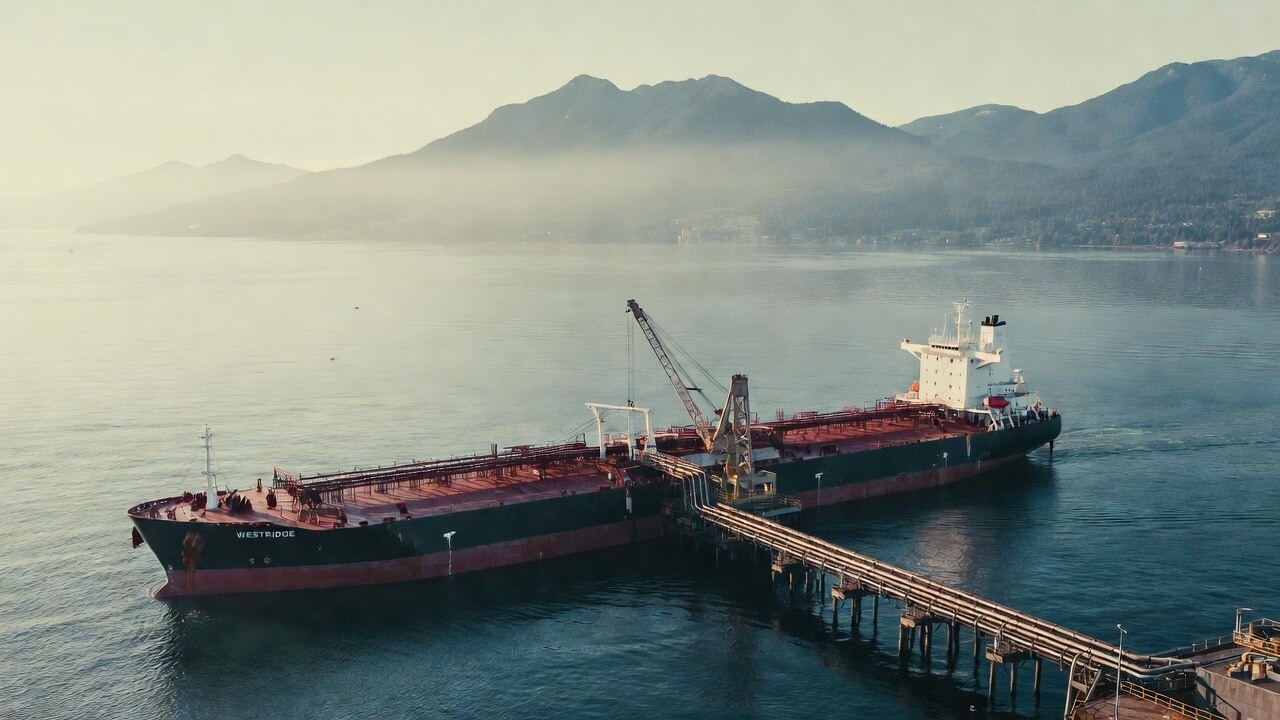
The completion of the Trans Mountain expansion in 2024 fundamentally changed how Alberta’s oil reaches the world. The pipeline increased capacity to about 890,000 barrels per day, creating a direct route from Alberta’s oil sands to tidewater at the Port of Vancouver. (CAPP)
From there, tankers can reach refineries across the Pacific.
That shift is already reshaping trade patterns. Within the first year of expanded operations, shipments of Canadian crude to non-U.S. destinations surged, with nearly half of exports from the Pacific coast heading to overseas markets. (Statistics Canada)
China alone accounted for roughly one-third of those exports, while Singapore, South Korea, India, and other Asian markets have also begun purchasing Canadian barrels. (Statistics Canada)
In other words, Alberta oil — once overwhelmingly destined for the United States — is now becoming part of a broader global supply network.
Why Heavy Oil Matters
Much of what Alberta produces is heavy crude, a dense oil that requires complex refining processes but is extremely valuable to refineries designed to process it.
That matters because Asia is home to many of the world’s newest and most sophisticated refining complexes. Countries such as China and India have invested heavily in facilities capable of processing heavier crude grades in order to produce fuels and petrochemicals at massive scale.
Demand for these types of crude supplies is expected to grow as the region expands its petrochemical production. Asia already represents more than a third of global oil demand, and consumption has grown roughly 84 % since 2000. (CAPP)
For Alberta producers, that alignment between supply and refinery capability is creating new opportunities.
A Growing Footprint in Asia
Since the Trans Mountain expansion opened, Canadian heavy crude has steadily gained traction in Asian markets.
Ship-tracking data shows that more than half of the oil shipped through the pipeline’s marine exports is now heading to Asia-Pacific destinations, with China emerging as the largest buyer. (DOB Energy)
In 2025, imports of Canadian oil into China surged dramatically, with shipments increasing by more than 160 % compared with the previous year as refiners sought new supply sources. (GuruFocus)
Analysts say the appeal isn’t just price — it’s predictability. Canadian oil sands projects operate for decades, producing steady volumes over long periods of time. That consistency makes them particularly attractive during periods of geopolitical uncertainty.
Stability in a Volatile Energy Landscape
Global oil markets have always been shaped by politics, infrastructure, and geography. When one region faces disruption, buyers quickly look elsewhere for secure supply.
Canada’s energy industry has increasingly been seen as one of those dependable alternatives. Production reached record levels in recent years — averaging more than five million barrels per day nationally — while export infrastructure has improved access to global markets. (Reuters)
For buyers in Asia, that combination of scale and reliability offers something increasingly valuable: supply that isn’t easily disrupted.
What This Means for Alberta
While energy markets operate on a global scale, their effects are felt locally.
Every new export market supports jobs across the province — from engineering and construction to logistics, technology, and professional services. Communities that support energy development see that economic activity ripple through restaurants, service businesses, transportation companies, and local suppliers.
In that sense, Alberta’s energy industry is part of the same everyday economy that keeps communities functioning across the province.
A Reputation Built on Reliability
The story unfolding in global energy markets carries a simple lesson: reliability travels.
Whether it’s a local business serving customers in Red Deer or an Alberta energy producer supplying refineries across the Pacific, the underlying principle is the same. When people know they can depend on you — when supply, service, and communication remain consistent — trust builds over time.
And in uncertain environments, that trust becomes a competitive advantage.
Alberta’s Best Business Directory exists to reflect that same principle closer to home — helping Albertans discover and connect with businesses that have built their reputations the same way: through consistency, reliability, and service to the communities they operate in.
Sources
- Canadian Energy Centre. Reliable West Coast shipments of Alberta heavy oil emerge as lifeline for Asian refiners. March 12, 2026.
- ATB Cormark Capital Markets research note by Patrick O’Rourke (March 2026).
- Studio.Energy research commentary by Carmen Velasquez (November 2025).
- RBC Capital Markets energy policy research note by Shaz Merwat (November 2025).
- Trans Mountain Corporation. Pipeline expansion export data and shipping activity reports.
- International Energy Agency (IEA). Global oil demand outlook for Asia-Pacific energy markets.
- Statistics Canada. Trans Mountain pipeline delivering increased crude exports to overseas markets.
- Canadian Association of Petroleum Producers (CAPP). Canadian crude oil exports and market outlook.
